Showing posts with label Nature. Show all posts

Sunday, 31 December 2023

End of 2023 blog

Well, another year ticked off the calendar! And, despite many online casting doom around instead of joy, we've had a lot of reasons to enjoy this year!

In January, as well a three Great White Egrets at Lin Dyke at Fairburn Ings one day, we saw another interesting sight on another day a cycle ride to Wetherby. If any reader recalls watching Bagpuss, one will be familiar with the story involving the Old Man's Beard! For the first time, we saw it for real!

Clematis vitalba, like many clematis, is a climbing plant which flowers in August and September but the seed heads then go on to form the beard-like structure that gives rise to the name. 


In February, another trip to Lin Dyke at Fairburn, which is a path overlooking the often flooded grazing meadows and lakes. The whole area used to be coal mining but you wouldn't know nowadays. 
These Highland Cattle are left to roam in the service of the RSPB by an organic farm not very far away from the site. 


Roe Deer are a regular sight around the area where I live, though this has been the biggest group I've seen of late (2 or 3 off camera too). These were in a field next to A64 road and I do wonder how many people travelling along actually saw them!


The old Roman road from York to Tadcaster is a good place to see wildflowers during Spring and Summer. These Lesser Celandines and Bluebells carpeted the ground in large numbers in April. West of Bilbrough Top is a good area to see a number of different, albeit common, butterflies and there's a good selection of bird species, especially the local Red Kites, to see. 


As many people know, Mayflies don't appear for long! So, by the River Wharfe, downstream of Tadcaster, it was lovely to see quite of number of them and these are a family that I've not really seen close up much before, normally they are out over rivers or dykes and not easily observable close up.
This one is the Green Drake mayfly (Ephemera danica)


In June, well, I could fill pages of blogs with our photos from our herpetogy focused tour led by Prof. Stephen Mullin and assisted by Jessica Yates in the rainforests of Panama but for now, I'll show you one of the recently described species that we saw there. This is Sylvia's Tree Frog, described in 2018 by Andrew Gray, Curator of Herpetology at Manchester Museum. This species, that occurs in Panama and nortern Columbia was once thought to be a variant of the Splendid Tree Frog, but was proved to be genetically distinct. To see so many creatures up close was such a privilege!


One of our many wildlife interests is in Dragonflies and Damselflies. YWT Askham Bog in July is a very good time to see several different species including this Ruddy Darter (Sympetrum sanguineum) 


Another place we go sometimes is YWT Hetchell Wood, a large area of woodland, partly an old quarry, near Thorner, east of Leeds. There's plenty of different wildflowers and mosses to see here and some great views from the escarpment. Though a walk is sometime spoilt here by dogs running off lead out of sight of their owners, like at so many nature reserves nowadays. 

In August we took another walk there to see wildflowers and insects. This is a Hornet Mimic Hoverfly (Volucella zonaria) and it is easy to see why from the markings. Again, another insect I've not noticed before but once you see one, they are relatively common in the right habitat. 


The Hazel tree in the allotment has been incredibly productive this year, and the nuts have lasted us until Christmas! In February, it will need coppicing and pruning, it looks worse than it is as hazel is a very fast growing wood and this activity will stimulate growth. I've started putting a large sheet of crop protector down underneath the tree to make it easy to find the nuts, though they do seem to spread over quite an area in the allotment!


Every year we grow some sunflowers in the allotment, though some do self seed. They are a magnet for bees and other insects, like this carder bee. These flowered quite late this year and were at their best in October. 


The very small things in nature fascinate me. Whether that's insects or flowers or in this case, lichen and mosses. Getting close up with lichens and mosses and liverworts is like entering a miniture world with tiny forests and strange formations. Identification though, well that's another matter but the main lichen in this picture I believe to be Xanthoria parietina. This was on a gate near Bolton Percy in November.


Ok, a little bit of cheating! The weather has been very poor in December 2023 for getting out into nature, so here's a photo from December 2022, again at Lin Dyke, Fairburn Ings, of a group of Whooper Swans that migrate to the UK for winter, often from Iceland. The main way to tell them apart from the resident Mute Swans is the beak colour and markings, with the Whooper Swan having a beak much more yellow in colour. 


Monday, 8 May 2023

Wildflowers near where I live

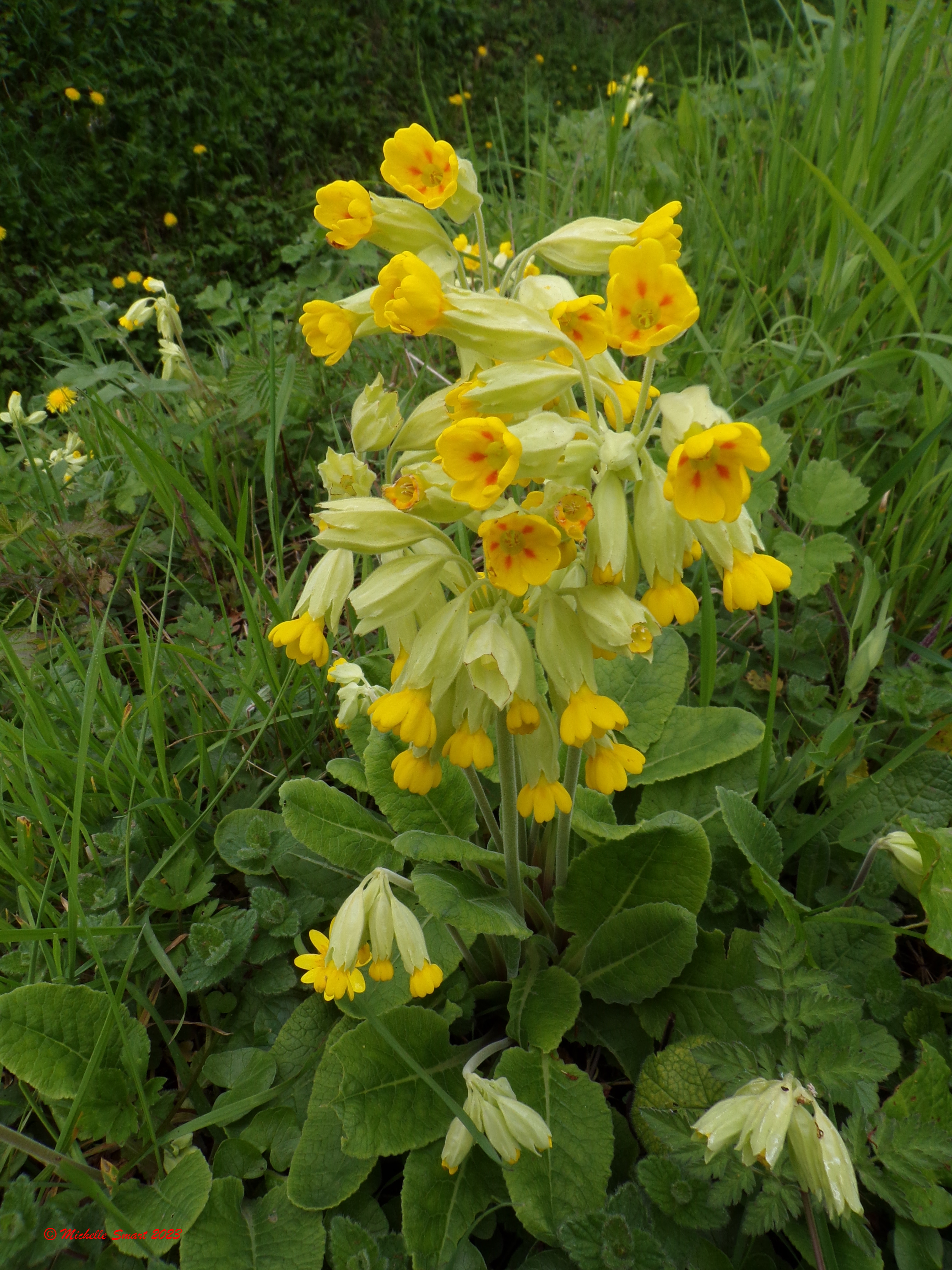
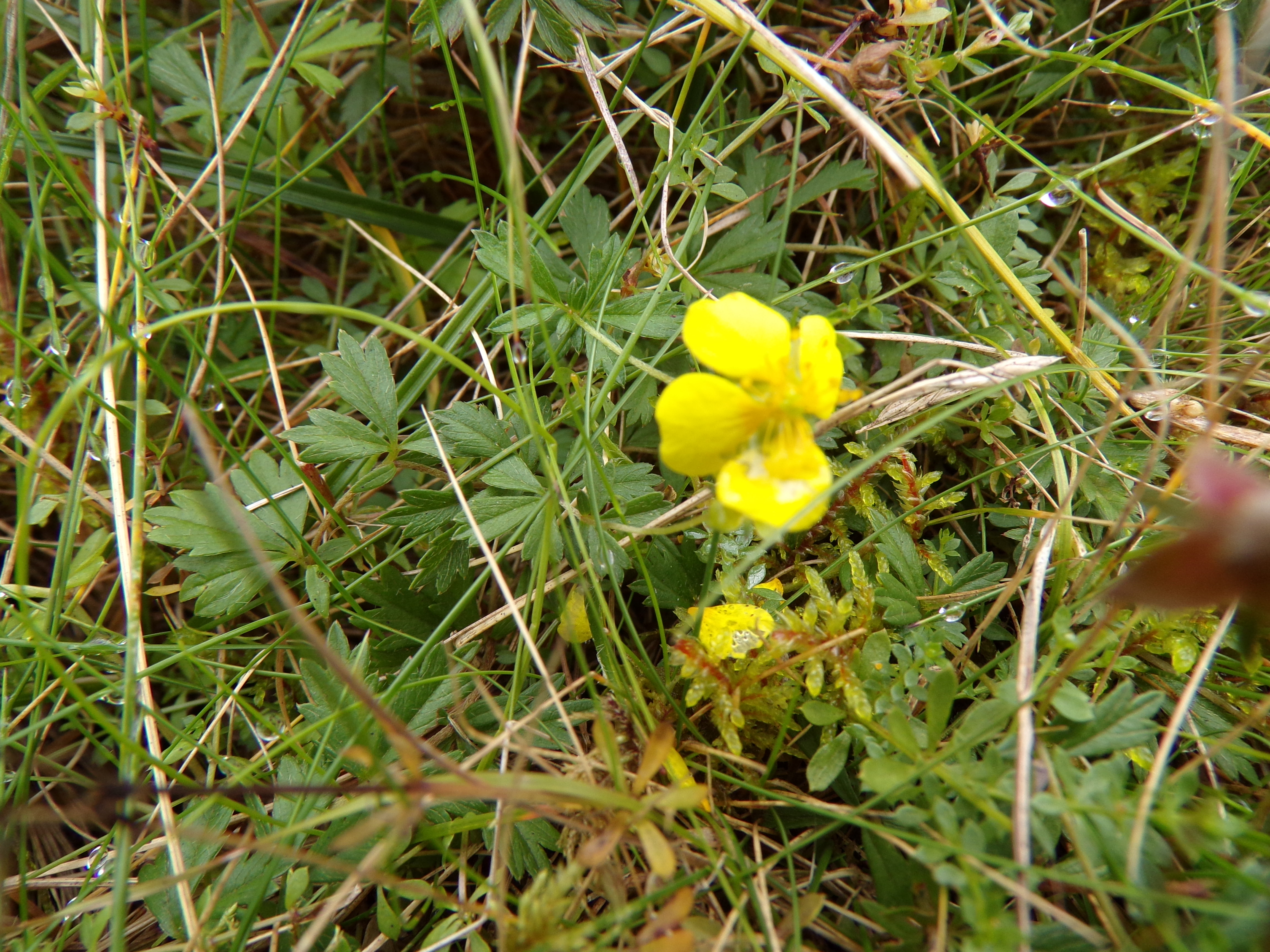
For the past couple of years we have been getting more interested in identifying wildflowers when out and about on walks and cycle rides. There's so much to learn and so much that we think we overlooked before!

In order, these picture are of Bugle, Cowslips, Bluebells and Lesser Celandines and Wood Anemone. 

The Lesser Celandines in particular have been all over the place this year, big areas of them, even some by the A64 along with Danish Scurvy Grass and now the first Red and White Campions coming through. 


Thursday, 10 November 2022

Little Asby Common - Part 2 - insects, birds and frogs

 In Part 1 of this blog series I looked at some of the plant life on Little Asby Common, Cumbria which we saw when we were staying in the village. 

In this blog I share some of the wildlife we saw up there. Like many uplands in the UK, you can hear curlew with their bubbling call, though we were too late in the season to see some of the other waders that nest in the area and too early for the influx of ducks and geese from Iceland and Greenland that pass through the region on migration. 

Quite some distance from other flowers I found this Musk Thistle (Carduus nutans) with what I believe to be a Bilberry Bumblebee (Bombus monticola) but I am not 100% sure of the identification! 

It does show how wide ranging bees are in search of food and it certainly found the thistle to its liking, as I was watching it for several minutes. 

This is a Meadow Pipit (Anthus pratensis), a common bird both in the lowlands and uplands. They are usually quite skittish around humans but this one was perched for a little while on a wall near Sunbiggin Tarn while we watched.

While we were at Sunbiggin Tarn we had to be very careful walking around as there were quite a few tiny frogs making their way towards the lake through the undergrowth!

I only had moments to get a blurry
photo of what I think is a Common Darter dragonfly (Sympetrum striolatum) enjoying the sunshine on a rock on the hillside above the tarn. I wasn't expecting a dragonfly out in the middle of the moorland but looking at the British Dragonfly Society sightings map, some have been seen here before. 


And of course, although they aren't wild, meet one of the sheep living on the moor, in conversation!

Little Asby Common - sheep wrecked?? Part 1


Whilst on holiday in the tiny village of Little Asby, near Kirkby Stephen in Cumbria, we were able to take several walks up onto Little Asby Common which is a limestone pavement moorland and common land. This extends over towards Sunbiggin Tarn, which is a small lake a few miles away, of which more later. There is a lot of archaeology up there, going back thousands of years and beyond Sunbiggin Tarn there is a stone circle at Gamelands near Orton.

But having been gifted books on lichens, mosses and ferns for my birthday, and with an increasing interest in wildflowers, I wanted to see what species there were on a moorland habitat some deride as sheep-wrecked. 

This is an Autumn Hawkbit (Scorzoneroides autumnalis), looks a bit like a dandelion. Common in rocky places and is perennial. 
This is a Harebell or Scottish Bluebell (Campanula rotundifolia) more common in the north of England into Scotland than further south. Very delicate flowers, of which there were quite a few on the moor. 

Dreaming about harebells is said to symbolise true love! 

This is a Maidenhair Spleenwort, (Asplenium trichomanes) bit of a mouthful to say but I wouldn't try eating it!

This is a fern that grow out of rocky crevices and is easily recognisable by the shape of the leaves. 

This is Tormenil, a kind of Cinquefoil (Potentilla erecta) found on acid grassland and moorland. 

Many of the flowers I found whilst on the moorland were quite small and delicate but obviously able to survive the presence of sheep on the fell. In fact, the grazing of animals is a integral part of the survival of smaller wildflowers as well managed grazing stops these being outcompeted by larger species as Plantlife explain in this article


In the next blog, more wildflowers and some of the creatures I saw during my time on the common. 


Saturday, 16 October 2021

Wheldrake Ings

It is some time since I have visited Wheldrake but had a trip out with family earlier this week. 

For those who don't know, Wheldrake Ings is managed by Yorkshire Wildlife Trust in partnership with other land managers and is part of the Lower Derwent Valley National Nature Reserve which extends all the way down the River Derwent to Bubwith. This area floods extensively in winter (and can at other times too) and is home to a huge variety of wildlife. Water levels on the site are managed for biodiversity. Thousands of overwintering ducks, geese and swans make their winter home there, warblers, cuckoos and hirundines breed there in summer and it is a stopover for many migrating species. The habitat supports a diverse range of other species too. 

Many farmers graze their animals on the meadows along the Lower Derwent (including Rosewood Farm), and there is currently a trial going on to look at where cattle are grazing and how this contributes to biodiversity. The cattle have been fitted with trackers for future analysis and to inform reserve management as well as being part of a "no fence" cattle management programme. 


We walked down through the reserve to the sight and sound of geese. The Pink-Footed Geese are back from the Arctic for the winter as well as the often more local Greylag and Canada Geese. The flight of a gaggle of Pink-Footed Geese is as if someone has told them that they should fly in v-shapes but no-one has told them how to do it! Greylags and Canada Geese have a much more defined v-shape to their flight pattern. 


On the right-hand side on the opposite bank of the river is Thicket Priory belonging to the Carmelite Order. This is a modern building with the original hall given to the Order now a wedding and event venue. In summer, walking down through the Ings in the evening is filled with the calls of warblers, and if you can hear them, Grasshopper Warblers, which emit a high pitched continuous reeling sound that I can only hear if the bird is facing away from me. I suspect the compression of sound waves if walking towards the bird when it is facing you pushes the call beyond the range of my hearing!

Turning a corner at the ancient creaky wind turbine brings you to the Pool Hide where we settled in for a while to identify the birds on the small lake there. In winter this is an extensive view over the wetlands and by mid-late November there will be thousands of Wigeon ducks whistling away. On our visit, a few Wigeon were present, some had small remnants of immature plumage. There were also Gadwall, Coot, Mallard and a family of Mute Swans with eight cygnets, the adults not taking kindly to visits by other adult swans. 


At the Pool Hide we were happy to see two (possibly three) Marsh Harriers swooping low over the field at the back of the lake. As large as Buzzards or Red Kites, these birds live and feed around reedbeds and inland lakes and also estuaries. 


These female birds have distinctive yellow crowns on their head which is one of the bird forms of identification at a distance, plus the low flying over the reedbed habitat. Several Marsh Harriers are known to live around Wheldrake Ings. 

The Ings have been managed traditionally for centuries, with livestock grazing and haymaking an integral part of that management. To remove these livestock to grow crops, which some seem intent on advocating as a general food production policy, would destroy this habitat as well as removing flood protection from communities further downstream. 


It is hard to believe that in a month or two, the field above will be underwater. From here going south and east, the landscape is largely flat, the skies big and the way is clear for the geese to find their wintering grounds all the way down the river as it merges with the Ouse, then the Aire, with the Trent forming the Humber and ultimately reaching the sea.


Sunday, 29 August 2021

Allotment Update - late August 2021


Guess what I have spent a fair bit of time doing in the allotment?! We've been eating home grown potatoes for the past month or so but a couple of weeks ago, the haulms of the many remaining potato plants got the first signs of blight, so I chopped off the leaves, with just stalks remaining above ground to mark where the plants were. I've given the skins of the potatoes a little time to harden off under the ground and then set about lifting them in earnest over the past few days. 

Luckily most of the tubers are in good condition for storing and any that aren't, either with one or two holes from slugs (or by my slicing through them!), get eaten up quickly. I use an old cloth to rub the soil off the tubers, ensure they are dry and then pack them into cardboard boxes with cardboard dividers between each tuber, that way if one does go off, it is not in contact with others in the same box. Looking at the haul so far, we will have our own potatoes until at least Christmas and maybe a little while into the New Year. They make great chips!


This is a snapshot of the harvest about a week ago. Courgettes, too many courgettes! However, the turnip was quite substantial and was used to accompany pies from our local butchers and in a curry. 


One of the perhaps fifty or so onions we have got hanging up in our store, though again we have been eating them since the start of July direct from the plot. Our porch (more a utility room to be honest) is the coldest place in the house and is good for storing potatoes, onions, garlic, apples and pears though the available space was reduced a few years ago when we have converted part of the room into a downstairs toilet (the benefits of this outweigh the reduction in storage in a family of five!)


Won't be long before we have home grown carrots. In between the stacks are some cosmos replacing the earlier wallflowers and behind the cosmos are minarette pear trees and the grapevine which has been productive this year.


The sunflowers are at least eight feet tall! Positioned in between two pyramids of borlotti beans for storing, they are competing with each other for light and so all are growing really tall. The allotment is east-west so they all get sunshine at various points during the day and it doesn't seem to be having any detrimental effect. 


At the top end of the allotment this year are mini sweetcorn and brassicas. The green net has been a very useful purchase over the years and seems to have kept the cabbage white butterflies out. The nasturtiums are useful for many reasons, not only for pollinators but as a distraction plant for blackfly and good ground cover into the winter until they die off with the first frost. 


This Red Admiral butterfly (Vanessa atalanta) was sunbathing midweek in the allotment on one of the carrot stacks and was unperturbed by my pointing a camera at it! We have one also coming to the buddleia bush in the garden along with numerous small tortoiseshell butterflies. 


Sunday, 22 August 2021

Gymnastics in the Wasp Olympics!


This wasp was busy performing gymnasics on a piece of fruit as it cleaned itself in the composting bag in the yard!


Sunday, 1 August 2021

Mullein

Over the past few months, we've been spending a bit of time trying to identify wildflowers. In fact, this has opened our eyes to quite a number of plants that we probably overlooked before and indeed some that we don't recall seeing. 

There's a new cycle route opened recently along the long-retired railway line from Tadcaster to Wetherby. Some of the route, from the Thorp Arch Trading Estate to Wetherby, has been open for a while now (and recently resurfaced which is a much needed respite for my back, bones and bike!) but the link from the Tadcaster to Boston Spa road to Thorp Arch over the River Wharfe is a recent addition to the route. On my first (and previously only) cycle ride up this route, I saw a grey wagtail and there's plenty of other bird life as it is well wooded and plenty of scrub land which is ideal habitat for many species. 

Thorp Arch Trading Estate is on the site of a former wartime Army munitions factory and some of the retail outlets and other businesses are in converted bunkers and wartime buildings. When we first took on our allotment, about eighteen years ago, an old chap who had taken over his allotment from his father in 1946 was using parts of railway carriages from Thorp Arch, dismanted after the war, as sheds. Given that the carriages will have probably have been old, redundant ones used as storage or premises during the war I expect they were probably dating from Victorian times! 


Near the trading estate there's quite a large area of tall, yellow flowers, standing to above five feet (150cm). These we identified as Mullein (Verbascum thapsus) and they were teeming with hoverflies, bees and other insects. However, the Mullein Moth is an early season flying moth and so it was unlikely there would have been caterpillars on these plants 


One of the plants was going to seed, so we have saved some and will try and grow it at home. It is a biennial, like foxgloves, so it will be in two years time that we can hopefully enjoy these lovely plants in our garden or allotment. 


Thursday, 29 July 2021

Context and Accuracy in Climate Change Conversation

I have recently been in conversation online with two individuals about the way in which incidents are described in relation to climate change. 

Of course, very few sensible people now doubt the science of climate change and that it is happening. There are online troll and bot accounts, and indeed individuals linked to some of the known lobby groups and polluting industries that do sow doubt or spread denial messages but sites like www.skepticalscience.com and www.desmog.com are two of my go-to sites for accurate analysis and information on who is often behind such activities. 

There is, perhaps sometimes understandably, a narrative in some environmental circles of "doomism" or "climate alarmism" which can often manifest itself in taking the worst case scenarios in climate predictions and presenting them as a fait accomplit. Michael E. Mann, in his book, "The New Climate War"  looks at how some of these narratives have been sown by some on the denialist side, framing it as being too late to do anything, or a message of fatalism to try and get people to give up taking action against climate change as they claim it is futile. I have had conversations with one of the regular doomist environmental campaigners on Twitter who regularly posts in terms that might just as easily be written as, "THE END" in flashing day-glo letters. I have made the point that if things really are as bad as he is making out, one either would get too depressed to do anything, or would simply think that one might as well do the bucket list while one still can. 

Michael E. Mann talks about urgency and agency. Yes, telling people that we need to do something quickly to tackle climate change but also that one can do something about it, however small or big and also that the sooner we act, the more mitigation can be done. 

This brings me on to the recent conversation about how particular events are described both on and offline. In the UK there is a newspaper, if you can call it that, called the Daily Express that frequently posts headlines taking what might be the extreme end of a storm or snow prediction for some remote corner of Scotland and framing it as being for the whole country. If people believe those predictions they would spend a fair chunk of the year too scared to step outside their front door! 

Also, often in the media and online, one will see headlines such as, "Country x underwater" or "Country y on Fire" when a severe weather or environmental event happens, when actually the event is confined to a particular part of the country. In the bid for the most eye catching headline context can be lost. Is the storm the worst ever? Or just the worst this winter? Has the drought happened before or is it new for the area? Is the wildfire across an entire State or is it localised to a particular area? This isn't downplaying the effects of such events, there can often be loss of life and property and hardship for those involved, but to understand climate change these events need to be put in the context of history and trends and frequency of occurrence, and indeed in the context of the area affected compared to the whole country or region. 

There is of course a fine balance to be struck between the "urgency and agency" as Prof. Mann puts it and ensuring that an accurate portrayal of events is made, one which cannot then be used by the well funded denialists to accuse climate change mitigation advocates in the future of crying wolf or of exaggeration or distortion. Also, we owe it to the wider public to be accurate, to be contextual, to be clear and explain how a particular event may have been affected by the wider climate changes and how the localised effects are creating harm. 

With permission, I have reproduced below a tweet I replied to the other day and will try to analyse this example and rephrase in a more contextual fashion. 

"Germany, Belgium, London, Italy, Pakistan now, floods. USA, Russia, Canada on fire. Any patterns emerging? Anyone? Or maybe it’s just unlucky.  If you want to stop the 50 years of talking and actually be pragmatic and do something, now would be a good time to start."

So, let's start with this. 

"Germany, Belgium, London, Italy, Pakistan now, floods." 

Yes, it is true that the above countries and places are suffering floods, in the case of Germamy and Belgium these are widely recognised as being abnormally severe. However, Germany is a big country, so is Italy and Pakistan, and all of those three have mountainous and other areas that are much less likely, if at all, to flood. Are these floods unprecendented? Are they merely worse than average? Are these a 1 in 25 or 1 in 100 year event, as is calculated by people such as actuaries and insurance agents? 

In London, there's historical record of the Thames flooding on a regular basis into the City, Samuel Pepys mentioned it in his diaries of the 1660s. A severe flood happened in 1928. Is it worse than that? What I do actually know is that the particular events have been caused by surface water flooding from thunderstorms, but here in the UK we get thunderstorms at any time of year, often severe in summer, so heavy intense rain isn't unusual, I've experienced it in York where a number of streets were flooded and buildings hit by lightning. How much has the increase in concreting over of driveways and additional housebuilding and tree cover loss affected the surface water flooding? Is it actually the landscape mitigation of a reasonably frequent event that has changed, rather than climate change making the particular flood worse?

So, from one simple statement there's a whole lot of questions. Can you pin those floods directly to climate change? Would they have happened if the man made climate change wasn't there? Are they made worse by climate change? 

"USA, Russia, Canada on fire." What?! All of them? That's a really big fire and they are really big countries! 

I checked, the wildfires in Canada, dramatic as they seem, are only affecting 0.12% of the country. Still a lot of ground and the smoke is drifting over cities but that is nowhere near the whole country on fire! What is 0.12% of Canada compared to say the size of Wales? (an often used comparision in reporting here in the UK!) Russia is so big that although the Siberian wildfires can be seen from space, most of the country will not be affected in any way by them. 

In 1950, the Chinchaga fire in Canada was the largest single fire in North American recorded history. Was that climate related? Were the 2014 Northwest Territories and 2016 Alberta fires climate change related or made worse from climate change? 

Again, all questions which really don't lend themselves to simplistic reporting. The author of the tweet is right to ask what patterns are emerging, or maybe these are - taken individually - just freak events or indeed are they part of natural cycles of burning and renewal? Is it just that humans have made these events more likely through activities unrelated to putting carbon into the atmosphere - for instance carelessness with littered glass or camping fires or indeed deliberate fire setting, these causes being responsible here in the UK for some wildfires. 

Going on, the author is inaccurate in seeming to imply that people are merely just talking and not doing. I can agree that not enough is being done, there has been inertia, influenced by polluters and denialists, in climate change mitigation, but if you take UK decarbonisation for an example, the switch from coal is nearly complete in power generation and a large amount of renewables capacity, particularly wind, has come on stream with lots more to follow. There's a lot of technical innovation happening, I am invested in a wave power company and also in agricultural robot manufacturer for instance and there's been substantial financial divestment going on as companies manage their risk exposure to climate change and fossil fuels. 

We can say for certain that the incidence and intensity of all substantial climate events, whether drought, floods, hurricane intensity etc is increasing due to climate change. The instability of what did formerly be more predictable weather patterns is increasingly noted and these have effects on land and in nature. There are more "stuck" weather patterns due to variations in the jet stream and heat build up in such as the Arctic is influencing the weather not just in that region but in lower latitudes too. 

However, simplistic headlines do not tell the full story and may even exaggerate or distort the story. Alarmist statements can be used to discredit or dishearten or indeed cause people to give up. However, if events are reported on accurately, the effects are expained and indeed these events are set into the wider historical and geographical contexts then the public can get a better idea of what is going on, how it may affect them and indeed how particular severe events may or may not be related to wider climate trends. 

Wednesday, 28 July 2021

Grazing meadow biodiversity

I took this picture this week, near where I live. I was going for a walk anyway with my family, but having had a rather frustrating conversation with a fundamentalist vegan online I wanted to illustrate the point of how this landscape differs from one which is monoculture crops. This blog is based on my Twitter thread. 

(note - everyone makes their own choices as to their own ethical framework, whether around meat or anything else, but I do find statistics quoted by many vegans online to be misleading, inaccurate and unfortunately there's a failure amongst many to look at the implications of what they see as a utopia without livestock farming)


What you are looking at are grazing meadows for cattle and dairy cows. The grassland is full of clover, some dandelions and buttercups. The field margins have numerous wildflower species and on the day of the walk at least 5 butterfly species and various bees, hoverflies, birds etc (my local patch bird list stands at 90 species since 2010), the hedgerows are good cover for them. 


(Wild chicory, one of many plants along the southern field margin)

If this was arable, nearly all the hedgerows wouldn't be there, the fields are too small for the economies of scale needed, machinery etc. 

The clover would not be there, nor many of the other wildflowers (there might be a few under the "set aside/field margin" schemes but nowhere near as many). The grasslands act as a carbon sink, the grazing is an integral part of the lifecycle and maintenance of the meadow.

Whilst the particular landowner really isn't interested in selling, in many other parts of the countryside these fields would be close enough to a town - and a major road - for housing development to be a real danger to this landscape. 


(Burdock, a substantial plant in one corner of the meadow)

There's other fields near us that are part of rotational farming, where crops are grown sometimes and then livestock (mainly sheep) are put out as part of the cycle. There's fields down the slope from where the photographs are taken that flood every year and grazing is the only farming activity that can be done on them.

Again, the biodiversity present on a flood meadow is far greater than that which would be present on a standard monoculture crop field.


(Ragwort - not in the meadow, as it is of course a hazard to livestock, but along the access road nearby)

The local farmers spend money in our town, some of them supply local businesses. Some local arable crop farming is for the local breweries and I know one local farm that leaves stubble which also helps such as migrating geese and other farmland birds such as grey partridge.

Do you think a remote landowner, supplied by huge corporate agribusinesses, selling into a long supply chain, is better than the above?


Fledgling blackbird in the allotment

Today I went up to the allotment before the heavy showers came, the two jobs being to pick more blackcurrants and to thin out grape bunches on the vine we have trained along the fence at the back of the plot. 

However, I noticed that in the hedge were the noises of young blackbirds and shortly afterwards found one sitting in the Falstaff apple tree. 


Can you spot the blackbird? He was sitting very quietly, not yet understanding enough to be afraid of my presence, in the sunshine looking, as they all do at that age, quite unsure of what to do next! 


Over the years we've had many blackbirds nest in the hedges around the allotment, both mistle and song thrushes have nested around the site along with dunnocks, wrens, blue and great tits, woodpigeons, house sparrows and one year some linnets did somewhere around the allotments. 


Wednesday, 7 July 2021

Leafcutter Bee

In this post I talked about the Leafcutter Bee that came to visit our back yard the other day. 

In one of the pots we haven't used this year have been some weeds that I have left to grow to see whether they were any good for pollinators. 

Discovered that the Leafcutter bee(s) have been busy! In the photograph there's the semicircular holes where the bee(s) have cut out sections of leaf to take back to their nest. 


Friday, 25 June 2021

Local Bees

We spend quite a bit of time making our garden, yard and allotment a pollinator-friendly oasis. Quite apart from the benefits to the local insects, another motivation is that over the past few years many gardens in our street have been paved or tarmac-ed over and some of the other nearby allotment owners still cling to the weedkillers and other chemicals or insist on mowing and strimming everything in sight. So we want to do everything we can to provide an oasis in this increasingly barren local landscape.

In this blog I talk about the Tawny Mining Bees that appear in Spring in our garden and make their little holes in the blank spaces in the flower beds. They came again this year and it was fascinating to watch them popping in and out and excavating with their legs. 

More recently, a friend in a neighbouring allotment has had Tree Bumblebees set up home in a bird box they have put up on the side of their shed. These are regularly in our allotment foraging.


The Tree Bumblebee (Bombus hypnorum) is a recent arrival to England, having only first been reported in 2001 in Wiltshire but has quickly spread north as far as Scotland. More about the Tree Bumblebee - even known to evict Blue Tits from nestboxes (!) - is on the Bumblebee Conservation Trust website

I was doing some weeding in the allotment not long ago and wondered what an unusual bee was that has stopped to visit some half grown poppies amongst the potatoes. Online enquiries found that it was an Orange-Vented Mason Bee (Osmia leaiana), not commonly recorded in our part of the world.


I contribute records onto iRecord, the NBN (National Biodiversity Network) recording scheme for flora and fauna. They also have species maps  which give a reasonable idea of the distribution, although this is from comparatively recent sightings. 

This last Wednesday I was in the yard with my daughter when a bee that looked like it was stuck to a section of leaf landed on a flowerpot! It spent a few minutes resting on the edge of the flowerpot before taking off, still with the leaf. 

Upon research, I discovered that this was a Leafcutter Bee, although I am not yet sure of which species, there are potentially three different ones that it could be that are found in North Yorkshire. 


Leafcutter bees cut out and take small section of plant leaves to line their nests and do no lasting damage to plants.  

A close up (a bit blurred as I only had the small Canon camera to hand) 


In the photo, you can see that the bee is using all its legs to hold onto the segment of leaf it has obtained, I would imagine that it needs rest every so often if it is carrying these all day!