Showing posts with label Recipes and Homebrew. Show all posts

Sunday, 24 April 2022

Cassoulet - ish

I enjoy cooking but have, I suppose like many people, a fairly limited selection of dishes that I can actually cook! I find recipes in books and online often way too complicated for me, not that I can't understand them given time but that I just want to get on with throwing things into a pan, wok or dish, frying or bubbling or oven-cooking it up. 

However, having gone round my usual list of Sunday dinner options, which doesn't just include the traditional English Sunday roast, I decided that I would actually try something new this week. 

My eldest mentioned recently that cassoulet, which is basically like a French bean casserole with meat, is something that she bought in tins when working in France but never really tried cooking it herself. Now, I am sure that my version of it would seriously annoy any respectable French cook but I decided to give it a go. 

Hence, "Cassoulet-ish" is the title for this blog!

So, one of the things that we grow a lot of in the allotment are borlotti beans for drying.


These are just some of them, it took a long time to pod all of them and when drying in the pods, they took up over four fruit boxes like you get at the greengrocers. 

We have also still been eating our carrots planted last year in tyre stacks, though they are getting down to the last few small ones now. 

But, even though we are at the very last of the crops planted the previous season, we do have asparagus!


These have popped up literally in the past couple of days and there's more just under the surface wich will do for tea this coming Tuesday evening. 

So, my version of cassoulet, which will serve 9 portions, involved the following:

Dried Borlotti beans - soaked overnight in cold water (really important), change of water, then boiled with some dried red kidney beans (again soaked overnight) for 45 mins or so. To be honest we just pour dried beans in the pan until it looks like we have enough but I would suggest that a medium mug full of dried beans per 3 or so people is about right.

Carrots - approximately 4 large ones, though half of the selection of carrots I put in were from the allotment and in various small sizes and strange shapes! Diced

Swede - two slices, diced

Beetroot - half of one, though one could use a whole one quite easily, diced. 

Mushrooms - about 500g (just over 1lb), chopped

1 red bell pepper, sliced and diced

6 lengths of asparagus from our allotment

Rosemary and other mixed dried, chopped herbs to taste. (the rosemary being a gift from another allotment holder!)

Olive or vegetable oil to brown the meat in

Half a lb (about 225g) of back bacon, trimmed of fat, diced. Bought from our local butchers, supplied by a farm 3 miles away

1 dozen medium sausages, sliced into half inch (1.25cm) slices, again from same butchers and farm. I chose some pork with sage flavouring but any decent butchers' sausage which isn't too plain or too spicy would be fine. 

Once the beans were done, I drained them and then popped them to one side on a plate while I browned the sausage and bacon in the same pan (to save washing up!) and added some stock (ideally one would use a pork or bacon stock cube but I had to substitute a beef one), enough to cover all the ingredients once the vegetables and beans are added in. I always find it worth giving any meat a good brown over before moving onto the next stage. 

I bubbled the meat and stock for a couple of minutes, giving it a good stir, then I added all the vegetables and beans, which luckily just fitted in the pan! And added the chopped up herbs. 


I then bubbled this for about 30 minutes with the occasional stir. I then added the asparagus and boiled for another 10-15 minutes. I did read somewhere that one should always cook asparagus vertically so that the tips are steamed, not boiled. Hence the mixture looks like some kind of weird bean birthday cake with candles!

Alongside this, I popped some part-baked baguettes into the oven on 200C (392F) for 10 minutes bought from the local supermarket (there isn't a bakery that is open on a Sunday where I live and to be honest I am not sure the one we do have during the week does baguettes to buy on their own anyway)

So, here we have the finished serving of something that may or may not be Cassoulet but certainly was very tasty!






Tuesday, 9 November 2021

Local dinner!

First of all, for all those reading in the North of England, no I haven't gone posh and decided to call my evening meal 'dinner'! But a headline of 'local tea' would be confusing in other ways, so 'dinner' it is, even though it wasn't at lunchtime!

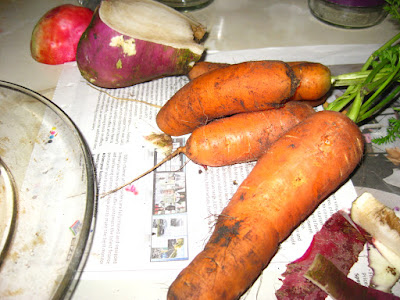
When I got home from work, light was fading fast so it was a quick trip up to the allotment to pick some carrots and a turnip. 


As I have mentioned many times, the carrots are grown in tyre stacks which gets them above the level of any carrot flies that may be around and protects them when the weather gets colder too. 

In the background of this photo is a striped beetroot that I didn't realise was stripy until I got it home from a local greengrocers , the broccoli was also bought for tea today from there too as our home grown ones have long since finished for the year. 


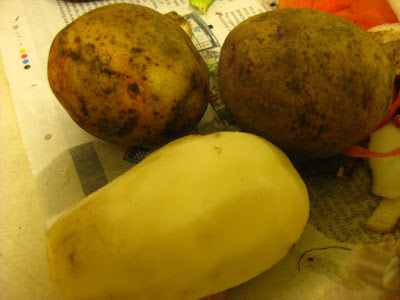
The potatoes are home grown though, not sure which variety as they are getting a bit mixed up in the boxes now as we work through them. Tasty though and also make good chips. 


The steak slice is from a local butchers too, they cook a large tray of this several times a week, and sometimes a chicken or spicy Moroccan one, and one can have as much or as little as needed. It is full of delicious steak in a thick layer, from a herd on a farm three miles away.


So, with little effort, and only the gravy granules bought from a supermarket, one can have an evening meal that both is local, fresh, supports local business and is tasty too! 


Monday, 30 November 2020

Sunday 29th November - Lockdown 2 - Day 25 - Home Grown ingredients in Tortillas

After podding the beans yesterday, today was using them in the tortilla filling for lunch. We also used home grown onion, and home grown tomatoes, from the tomato plant in our bedroom that has really got going again now the heating is on a lot more!


We had a similar number of tomatoes in the salad on Saturday too!


We've also added chicken from our local butchers (sourced from near Ripon, North Yorkshire, and some dried kidney and pinto beans as well as our own. 


Friday, 27 November 2020

26th November 2020 - Lockdown 2 - Day 22 - Pumpkin Chutney

Yesterday, I set to and made a batch of pumpkin chutney (well from what is to be honest an orange coloured squash!)

The first task was the peel the flesh, get the seeds and pith out and then chop up the squash into small pieces ready for cooking. 


I needed two pans into which also went about half a kilogram of brown sugar for each, which gives the chutney a nice darker colour, and about 3-4 cm depth of pickling vinegar into each pan. Into one pan I also chopped up some ginger and into the other I put a tablespoon of both chilli flakes and garam masala. 

The mixture was bubbled for at least three hours on a low heat, stirring every so often and then near the end mashing the mixture and increasing the heat to ensure a decent consistency and no vinegar was left visible as liquid. 


The mixture was then transferred to sterilised jars, it is best to use jars from such as indian sauce mixes rather than jam jars for this because of the type of lid as long storage of chutney containing vinegar will eventually corrode certain lids. The jars were sealed and left to cool. 


Monday, 9 November 2020

9th November 2020 - Lockdown 2 - Day 5 - Dried Apple Rings

Just a quick post today but just time to show the dried apple rings that we made. First time we've tried air drying fruit and it does seem to have turned out alright. The apples were peeled, washed, cored and sliced into rings. Then they were dipped into lemon juice before being hung on a hazelnut stick over the cooker and left for six days or so. Finally, they were put in the oven for about thirty minutes (which might have been a bit too long to be honest) to kill any bacteria. These are now stored in an airtight container. 


Thursday, 5 November 2020

5th November 2020 Lockdown 2 - Day 1 - Allotment Update

Well, we're back in lockdown again here in England, although the rules are slightly less strict than first time around. So, for me it is back on furlough for at least the next four weeks. 

Today, I popped up to the allotment for yet more apples, we have been blessed with an abundence of apples and indeed pears and soft fruit this year. The Falstaff minarette apple is nearly finished now, as has the Chiver's Delight but in the past few days the Gala, always a late ripening tree, is now in full swing. I have had to put a large net over the Falstaff as the birds do go for them as the weather gets colder. I saw Redwings on a wild apple tree yesterday on my cycle ride. 

Indoors, the remaining pears all decided to ripen at once so I spent an afternoon peeling and chopping and made five jars of pear compote. There's still a few in the fridge, they are very ripe though!


Although there hasn't been a frost here yet, it has been getting quite cold and so it is time to protect the Meyer Lemon tree at the allotment. Maybe you would expect this plant to come indoors in the winter, but we've found that it suffers from scale insect indoors, which we haven't been able to get rid of by any organic means. So, over a year ago now we moved it to the allotment and within few weeks there were no more scale insects, so it was obvious that there were predators in the allotment that took care of them! 

Being in the allotment does mean that it needs protection during the winter and last year we wrapped it in plastic which meant it was protected from frost. This year we have used bubble wrap as we have three lemons on the tree and so we hope that this extra protection will be enough to help them survive until Spring. There's a layer of straw around the roots as well. We have left a gap at the front of the pot where there is just soil so that rain water can enter the pot, although we do water it a little too. 


Despite being early November, with no frost as yet the nasturtiums and marigolds are still creating a pretty show at the top end of the allotment where the onions were earlier in the season. Whilst they have to be contained to avoid swamping the crops, they act as a magnet for pollinators and other insects, and even when they die off with the frost they act as ground cover over the winter and rot down as mulch. 


This is the first of this year's parsnips! There's a row in the same patch as the onions were and the nasturtiums above. Our favourite way of cooking them is as parsnip chips, deep fried in the chip pan. Cooking in smaller batches is best, too many in the pan sends them soggy rather than crispy. 


Thursday, 22 October 2020

Autumn in the Allotment - Part 2

 One thing which has been a nice problem to have in the past few weeks is what to do with all the pears that we have harvested, especially as they seem to all want to ripen at once! (there's only so many pears I can eat!)

So, with the help of one of my go-to preserving books (The Preserving Book  - DK/Soil Association) I have been bottling pears for use in the new year after the remaining stored ones have been eaten. 


The pears were washed and peeled and chopped up and put into sterilised jars. A thick sugar solution was boiled up to pour into the jars and then the jars were heat treated in the oven. 

We've also been making Kimchi using this recipe which appears to be relatively foolproof - though I was rather surprised to get a decent result on the first time I made it! Whilst it is fine to keep the finished kimchi in the fridge for two or three weeks, making sure that the ingredients are fully submerged, we've found that boiling the mixture up and putting in sterilised jars means a much longer shelf life although the intensive flavour does reduce quite a bit by doing so. 


It will be soon time to make another batch as there's three more cabbages ready in the allotment now!
In the same patch in the allotment the very last sprigs of summer broccoli are available but then there will be a gap in this until the purple sprouting broccoli is available in the new year. A handful of beetroot and the last of the spinach beet are also available to pick. Next year I am going to try a different variety of beetroot as the variety Boltardy haven't done that well for a couple of years to be honest so I am going to maybe try Cylindra which the plotholder of a neighbouring allotment has been growing successfully this year. The "Italian" varieties don't work very well in our allotment at all. 


It will soon be time to make pumpkin/squash chutney. The method I use is documented here  but this year I won't be able to go to my parents' house to use my mum's big jam pan - this pan did belong to her mother and was saved from being turned into raw material for the war effort! I do two different chutneys, one ginger and one spicy, with to be honest a general guesstimate of the spices required but it all turns out fine every year. The spicy one is great with a mature cheddar. I also sometimes make a courgette and onion chutney, in fact I am currently eating a jar from 2017 which again has a bit of a kick to it and has gone well with Davidstow Cheddar. I made rhubarb compote earlier in the year. 


Finally, I bought a new English Lavender bush for the allotment this year as the old one looked as if it had reached the end of its useful life (it has since regenerated itself aftera thorough pruning back!) and whilst the new one is still small, I've seen bees on it all summer and into autumn, the other day there was some kind of carder bee for instance. I also have a couple of lavender plants for the yard which are in pots right now, one of which was looking very sorry for itself outside a small Sainsbury's supermarket during some hot weather but has revived happily in the back yard!


Friday, 10 July 2020

Cycle ride - Comma Butterfly

I needed to go into York today for some ingredients for the Kimchi we are going to make from cabbages that are pretty much ready to eat in the allotment right now. There's an excellent Oriental supermarket on Rougier Street called Red Chilli (next to the restaurant of the same name) which is fascinating to browse round for the wide selection of interesting foodstuffs you have never heard of! I have never seen a Mooli before today, they look like radishes from hell, size of a rounders bat!
I picked up some Korean red chilli flakes, fish sauce, ginger and rice vinegar for the kimchi and tins of water chestnuts and bamboo shoots and some gluten free soy sauce for the store cupboard.

Anyway, along a lovely quiet road near Bilborough I watched a Whitethroat (Sylvia communis) singing on a telegraph wire, they give a brief burst of slightly scratchy song before moving a short distance to another perch and repeating the song (Lesser Whitethroats, which I haven't seen yet, live more in bushes). There were plenty of Meadow Brown and some Ringlet butterflies and lots of wildflowers in the verges.

On a patch of thistles I discovered this Comma Butterfly (Polygonia c-album) feeding on the flower heads. After severe declines in the 20th century, this butterfly is now quite widespread, we've had them along the path through the allotments from time to time too.
When the thistles go to seed, I'll be picking a few for the wildflower patch I am trying to start in the garden, there's a lot of them flowering on roadsides at the moment and plenty of insect life on them too.


Tuesday, 30 June 2020

Lockdown Day 99 - Blackcurrants

I spent the morning again picking blackcurrants. Now that we have enough in the freezer for our jam requirements I have taken to bottling them in syrup for use on my porridge on a morning and perhaps on ice cream. There's still loads on the bushes to pick but it was lunchtime by the time I had picked two punnets, as well as a punnet of raspberries.


For the blackcurrants, I wash and take out any stalks and leaves from the crop. Then I boil up my sugar (350g sugar to 600ml water) whilst sterilising the Kilner Jars. The blackcurrants then go into the jars and the syrup poured over them. They are then heat treated in an oven at 150 deg. C for 35-45 minutes.

Tomorrow will be the one hundredth lockdown blog and, as it is likely that my furlough will be ending in the next week or two, it will be the last in this series and I will put together some thoughts and reflections on this rather strange and worrying period and some thoughts about the future and how we can produce a better, more sustainable world in the recovery.

Monday, 29 June 2020

Lockdown Day 98 - Rhubarb and Pumpkin Compote

Another rainy and grey day today, so I have been inside catching up on a few jobs. As we pick the berries we need all the freezer space we can get so I did a little digging and found a bag of rhubarb and some pumpkin from last year! It seems to have kept fine, albeit a little longer than expected so I have boiled it up with some sugar and some ground ginger to make a compote which I can use on porridge over the next couple of months.

I've planted some more pumpkins and expect to be able to do quite a bit of chutney later in the year, either ginger or spiced up with cumin and chilli powder. Ideal for putting on cheese or cooked meat sandwiches or as an accompaniment to spicy Indian dishes.

I also do courgette and onion chutney if the courgettes get too overwhelming!


I have two "go-to" books when it comes to preserving:


The Complete Book of Preserves and Pickles by Catherine Atkinson and Maggie Mayhew published by Anness Publishing Limited

and


 The Preserving Book by Lynda Brown published by Dorling Kindersley in conjunction with the Soil Association


Thursday, 14 May 2020

Lockdown Day 52 - Frost relief and wine bottling

After the predictions of a very cold night last night, I was a little concerned as I went up to the allotment in case, despite my protections, there was frost damage to vulnerable crops. However, apart from a few potato tops - still poking through the earthing up - there was no further damage. Lovely sunny morning too. The potatoes will recover although right now bits of the foliage look like a they have been hit with a flamethrower!

The asparagus I picked last night was very nice as part of a meat pie and vegetable tea. That's the fourth lot of asparagus this season and so two more croppings left before the plants are allowed to grow into ferns for regeneration. I gave the ferns last year at the end of the season to a local greengrocer that also does flower arranging.

Looking at the forecast, after the weekend the weather appears to be warming up quite nicely so that will give chance to put out the pumpkins, courgettes and other seedlings that are currently in the lean to greenhouse and the sweetcorn that is currently on the window ledge in the downstairs bathroom. All bar one of the sweetcorn have germinated!


Out in the yard, our little miniature cherry tree, given to us as a gift last year, has blossomed and there are at least two cherries forming. I have bought some more tight linked mesh to construct a cage for this and for the strawberries at the allotment, otherwise there will be some very satisfied birds come the summer!


Earlier in the week I decided to bottle some home brew parsnip wine that has been sitting in a demijohn in a bedroom for perhaps longer than necessary, although it won't spoil and to be honest benefits from ageing. I use J2O bottles as the wine is around 15-16% and one bottle of this is enough to feel quite happy with the world! I'll leave these for another 4-6 months then they will be drinkable, but not all at once!


Thursday, 9 April 2020

Lockdown Day 17 - Wine Making - next stage

Today it was time for the next stage in the wine making, started on day 10

http://www.cashandcarrots.com/2020/04/lockdown-day-10-wine-making.html

The above article links back to previous blog posts on the method and equipment needed.

 This is the "must", the fermenting mixture of parsnips, raisins, yeast, lemon juice and sugar.

There has been a definite alcoholic smell in the kitchen when I have taken the lid off to stir the mixture during the past few days!

Once drained, the remaining contents go onto the compost heap.


Here I have two demijohns (turned out I only needed one but better to be over prepared.

Also needed is a funnel with three layers of muslin cloth to filter out bits of parsnip and raisins.

Also ready were the airlocks for the top of the demijohns. All equipment was sterilised with boiling water before use.


With the help of one of my daughters - holding the funnel steady - I then gradually drained the contents of the bucket through the muslin in the funnel into the demijohn. Mashing the must a bit does also extract some more liquid.

The liquid looks very cloudy at this stage but over the course of a few weeks gradually clears.

Once full, I fitted the airlock with a little bit of water in (to show whether fermentation is going on - once the water is level in the airlock fermentation has ceased, although I always leave it a little while after to be on the safe side as I once found a wine cork pop back out of a bottle!)

Now the demijohn is near the downstairs radiator for a bit - I will put it into one of the bedrooms out of the way eventually but I don't put the demijohn in a bedroom for a couple of weeks until the fermentation has slowed otherwise I get kept awake by bubbles popping as they pass through the water into the air!

Thursday, 2 April 2020

Lockdown Day 10 - Wine Making!

If you have seen some of my blog or Twitter posts over the past few years you may have seen that I home brew my own parsnip and blackberry wine. At this time of year, any remaining parsnips in the allotment are all woody, have started sprouting again and as such are unfit to use as vegetables in meals. However, they can still be used for wine making!

I have already gone into some detail on the process involved and this is described in the blog posts here

http://cashandcarrots.blogspot.co.uk/2013/01/parsnips.html
http://www.cashandcarrots.com/2013/03/parsnip-wine-making-part-2.html
http://www.cashandcarrots.com/2013/06/wine-tasting-and-bottling.html

 Here are some photos from today.

There were 2kg of washed, peeled and chopped parsnips, 1kg of sultanas, 4.5 litres of water and 1.25kg of sugar.

The mixture was brought to the boil for a few minutes then put into the large tub in the second photo to cool down, and given a bit of a mash to extract more juice from the sultanas.

It is not a good idea to overcook the parsnips as you don't want lots of mush in the mixture, it is the juice and sugars you are after.

Now, I am waiting for it to cool down before adding the Campden tablet to deal with any wild yeasts that may impair the wine, and after 24 hours I will be then adding the wine making yeast and putting in a warm place to ferment for a few days before siphoning off to put in demijohns for further fermentation.

I find it best to leave for 9-12 months at least after bottling, it does sweeten and mellow with age, although is drinkable after 6 months.

Sunday, 1 September 2019

Harvest time

This year here in the UK it is perhaps more important than usual that those of us who grow our own food aim to preserve and store as much as possible. Wherever you lie on the Brexit debate, it is clear that there will be issues in supply chains, I know enough about emergency planning and project management to know that it only takes one overlooked thing to send things off course with problematic consequences. The people in the know - those that haven't been silenced by NDAs (Non-Disclosure Agreements) whether they be in retail, growers, livestock, import or transportation have been warning of issues for a long time and indeed the Government's own risk assessments have rather gloomy, if not highly disruptive, outlooks for Post Brexit UK.

Before I get onto our present allotment harvests, may I recommend "The Fall" podcasts by James Patrick (@j_amesp on Twitter) and Guy Dorrell (@GuyDorellEsq) for tips on how to prepare yourself for any disruptive event - the same advice is applicable to such as weather emergencies that disrupt access and transportation.

This isn't scaremongering. I will actually be glad if nothing happens. But it is better to be prepared and nothing happens than being caught out and wishing you had prepped.

Now, this year has been incredibly good for our allotment blackberries! Why anyone bothers to buy blackberries in a shop I really do not know, especially when commercially grown blackberries will have had goodness knows what chemicals sprayed over them. Even if you don't have your own supply, there are ample bushes out there - the "edgelands" in urban areas are often the places where foraging is most useful. My grandparents used to pick from the railway embankment (obviously not going past the fence separating the railway!) near their flats in inner city Leeds, and I remember going to do the same at a local railway station, as did many others.

Unfortunately, we are running out of space in the freezer, despite turning a lot of soft fruit into jam already! Four tubs of blackberries have been given to my parents too!

So, I have tried my hand at bottling blackberries in sugar solution today. Hopefully these will store and then can be used on breakfast cereal or in puddings.


Today was also the day that I started picking pears. Of course, they will need time to ripen in storage, but it was really nice to come home with a basket full of Comice and Conference pears.

We have two "Minarette" style pear trees in the allotment and whilst there aren't quite as many as last year there are certainly enough to keep us going for a month or two!

The three minarette apple trees in the allotment - a Gala, Chiver's Delight and Falstaff, aren't quite ripe yet and indeed the Gala is an incredibly late ripening one with some of the fruits only just ready at the start of December!


Also picked today were some more damsons and blueberries.

The pot blueberry bushes took about three years to come into full production but these past two or three years have been very heavy cropping. They are in pots as they need an acid soil - they are in ericaceous compost and if possible only get watered with rain water, though this has been difficult to keep to this summer at times.

The damson tree is supposed to be a minarette, but seems to have outgrown itself although we do try and keep it below 6ft tall. We might well prune it quite severely this winter to shape it a bit better.

However, this year it has excelled, in some years a late frost in May will destroy the blossom and reduce the cropping but I think this year there may well be around 150 fruits at least, never had that many before!


In our back yard (if you are reading this in the US - a yard in the UK, like ours, is usually concrete and often has a wall round it) is a pot fig tree and this year (after about 3 or 4 years maturing) is producing ripe figs - only two so far with two more on the plant but I had one for breakfast the other morning and it was very tasty!

Again, only gets rainwater and with any fig tree, the roots need to be constrained. It is in what probably is the most sunny spot in the yard and the wall behind the tree gets very warm in the sun, in fact the thermometer on the wall measured nearly 50 deg C one day in the recent heat wave! But a warm wall releases heat slowly overnight thus keeping the plant warmer than it would otherwise be.


Wednesday, 3 January 2018

Parsnip wine

Just before Christmas I got around to bottling some parsnip wine that had been quietly maturing in a demijohn in one of the bedrooms (there's demijohns lurking in at least two bedrooms!). This one stopped fermenting a little while ago but I have not had chance to bottle it, but to be honest parsnip wine benefits from plenty of time to mature anyway. 

Note to anyone thinking parsnip wine - what ??? It actually does taste like wine - seriously, when I first did this about 3 years ago I was so surprised with the results! 

Pretty clear wine although as you get near the bottom of the demijohn it is harder to keep the silt from getting sucked up the tube!

The method I used to make the wine is here :

Bottling etc here

Now, this year's wine has turned out quite sweet, and has indeed mellowed with age. Bottles from a well known soft drink often available in pubs are the right size for a couple of glasses, the wine is a lot stronger than 'normal' wine so probably not best to drive or operate machinery afterwards!


Monday, 1 January 2018

Happy New Year!! (well sort of...)

First day of the new year (well Gregorian calendar anyway!) , beautiful sunny day as I write this, and I am laid up with Plantar Fasciitis in my right foot! Now, although that does sound like it could be an ideal flower to grow in a hanging basket (!), it basically means I have strained the skin/muscle that is between my heel and my toes, and it is too painful to walk anywhere if I try to put pressure on it.

So, a trip to the allotment is out of the question, possibly for the next few days, but my thoughts are already turning to the new season and what to grow in the coming year. That being said, the allotment is still productive with sprouts, parsnips and leeks there for the eating!
In store there's onions and garlic hanging up, apples in the shed, and in the cupboards pumpkin chutney, pickled courgettes and gherkins, and a large collection of various jams.

And there's the amazing long lived tomato plant, which gave us 3 fresh home grown tomatoes on Boxing Day!

We even had three peppers in December from the outdoor lean-to greenhouse!


There's still lots of ground to dig over and distribute compost over in the allotment, but that will get done when my foot is better. The next job I think is to start some peppers off in pots on a bedroom windowledge that has a radiator beneath it (same place as where the tomato plant lives)


The Meyer lemon tree is flowering, I think it is a bit confused as it was brought inside in early November so with the warmth in the house it probably thinks it is Spring now! There's still one remaining lemon on it as well!


So, what went well in 2017:


Borlotti beans - grown up an old swing frame they have produced lots of these rather pretty and indeed very tasty beans!

Gherkins - never grown these before and three plants were intensely prolific in the lean to greenhouse at the front of the house. Really nice on cheese sandwiches or indeed as an accompaniment to burgers and other meat dishes.


Carrots - grown in tyre stacks these are still giving us carrots despite the snow and frost - the tyres act as insulators and raise the carrots well above the ground - which also helps with controlling carrot flies. The courgettes were prolific (as is their modus operandi!) and the calebrese did well too.


What didn't go well in 2017

The peas - very few peas this year, I think this is a problem other people have had.

Potatoes - whilst we have had home grown potatoes from late July until December, they haven't been that big, and blight was a problem for some of them. A good year for us means home grown potatoes until February.

Just in time for Christmas I bottled some parsnip wine that has been sitting maturing in a bedroom for some considerable time (I think it was started about 2 years or more ago!). However, it does benefit from aging and indeed the first bottle of this tasted was quite a sweet wine and indeed quite clear.


It is strong stuff, hence using the smaller bottles!

Happy New Year!


Monday, 30 May 2016

Rhubarb Chutney

Time for something new, not tried this recipe before, but with quite a lot of rhubarb to get through, it seems like a good idea! 

In Yorkshire, an area between Leeds and Wakefield is known as the "Rhubarb Triangle"
The rhubarb in the allotment was originally a root cut off one winter from some from my mum's plant, which is from the same type of soil just outside the designated EU area - that being said there was a forcing shed near their house. 

Anyway, what you will need to make approximately 2-3 jars of chutney is:

1kg rhubarb, washed, peeled and diced. 
1 medium onion, peeled and chopped into small pieces
Pickling spice (usually obtainable in small jars from the supermarket where all the other jars of herbs and spices are)
200ml pickling vinegar
400g sugar
1 small lemon (I used two really small ones from the Meyer lemon tree we have)
1 small piece of ginger root, peeled and chopped up small. (if you want to have a bit of fizz on your tongue, try a small piece of raw ginger!)
First step is to wash, peel and chop up the rhubarb, sometimes you can just peel it straight off with your fingers, but sometimes you can - pointing away from you - pare the skin off as if you were whittling a piece of wood. Dice up and place in a large saucepan. De-seed and chop up the lemon roughly. 
Then peel and chop up the onion and add to the pan. (note I actually made two 500g batches of chutney, one with onion and one without)


Peel and chop up the ginger and weigh out the sugar, and measure out the vinegar. Note that I have used a mixture of dark brown and white sugar but all it does is vary the colour of the chutney.


Add all the ingredients to the pan, and then boil up and simmer until everything goes mushy. Then, using a potato masher, mash up all the mixture and then boil up until the vinegar has reduced and the chutney is rather sticky and clingy. 


Then spoon into sterilized jars - it's easier using a funnel on top of the jar, seal and allow to cool before labelling up.